
Shohei Ohtani Goal Setting Method
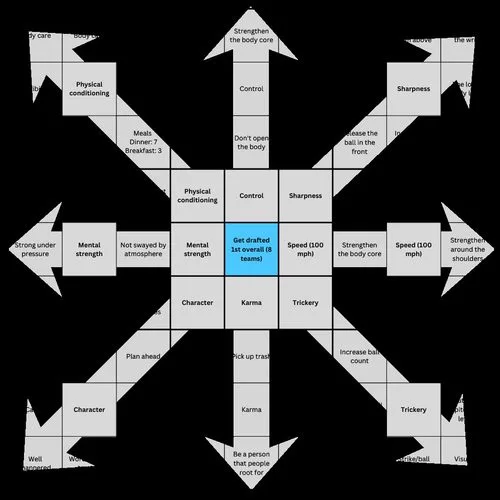

The Goal-Setting Grid That Built Shohei Ohtani (And How Your Athlete Can Use It)
Most athletes have a big dream. Fewer have a plan that turns that dream into something they actually do on a Tuesday afternoon.
That’s the gap Shohei Ohtani closed in high school, long before he was a two-way superstar chasing MVPs and championships. At sixteen years old, he sat down with his coach and filled out a single sheet of paper: an 81-box grid that’s now known as the Harada Method, or the Mandala Chart. It’s the same tool I use with the athletes I work with, because it does something most goal-setting advice doesn’t. It forces you to get specific about the boring, repeatable, controllable stuff that actually gets you where you want to go.
Here’s how it works, and how you can build your own.
What Is the Harada Method?
The Harada Method was developed by Japanese educator Takashi Harada, and it’s built around a nine-by-nine grid, 81 boxes in total. Ohtani’s version has become famous because it’s a rare, detailed look inside how one of the best athletes on the planet actually thought about his own development as a teenager, not just his talent.
The structure is simple on the surface:
- The center box holds your one big goal. For Ohtani, that goal was to be the number one draft pick, selected by eight different professional teams.
- The eight boxes surrounding it are the core pillars you need to build to reach that goal. Ohtani’s included things like pitching velocity, physical conditioning, mental strength, and character.
- Each of those eight pillars gets its own mini-grid, expanded into eight specific, controllable actions. That’s 64 action steps total, sitting underneath the one big dream.

Why Ohtani’s Grid Still Gets Talked About
A few things stand out when you look at what Ohtani actually filled in.
The physical and technical work is exactly what you’d expect. Building arm strength, adding muscle mass, sharpening control, finding a consistent release point. This is the part every athlete already knows they need to work on.

The character habits are the part that surprises people. Picking up trash. Keeping his room clean. Reading books. Showing respect to umpires and to people around him. Ohtani connected these habits to luck, to being the kind of person other people want to root for and want to help succeed. That’s not superstition. That’s a sixteen-year-old understanding, earlier than most adults do, that how you carry yourself off the field shapes the opportunities that come your way on it.
And the mindset box ties it all together. Ohtani wrote about keeping a calm head and a passionate heart, the ability to stay level under pressure while still caring deeply about the outcome. If you’ve ever coached or played at a high level, you know how rare that combination actually is. Most athletes run hot or they run flat. Very few run both, on purpose.
Talented athletes rarely fail because they lack ability. They stall out because their goals live in their head as a feeling, not as a plan.
Why This Works, From a Mental Performance Standpoint
I’ve spent years working with athletes from youth hockey up through the NHL, PWHL, and Olympic level, and the pattern I see over and over is this: talented athletes rarely fail because they lack ability. They stall out because their goals live in their head as a feeling, not as a plan. “I want to play college hockey” or “I want to make the national team” is a direction. It’s not a Tuesday.
The Harada Method works because it closes that gap. It takes identity (“I want to be a number one pick”) and breaks it into behavior (“I will work on my release point three times a week”). Behavior is something you can actually control, every single day, regardless of how the last game went or what a scout thinks of you this week. That’s the whole game in sport psychology: shrinking your focus down to what’s actually in your hands.
It also builds character and mindset into the plan on equal footing with the physical skills. Most athletes have a training plan for their body. Very few have one for who they’re becoming as a person and how they’ll hold their mind steady when things get hard. Ohtani’s grid treated those as just as trainable as his fastball.

Build Your Own Grid
You don’t need to be a future MVP to use this. Here’s the simple version:
- Draw a nine-by-nine grid, or nine boxes with the center one highlighted, and eight more grids around it.
- In the center, write your one big goal. Be specific. Not “get better,” but the actual outcome you’re chasing.
- In the eight surrounding boxes, name the eight pillars that goal depends on. Mix the physical and technical with the mental and personal. Include something about character. Include something about mindset.
- For each of those eight pillars, write eight specific, controllable actions. Things you can actually do this week, not vague intentions.
When you’re done, you’ll have 64 concrete habits sitting underneath one big dream, and a plan you can actually follow on a random Tuesday when nobody’s watching and motivation isn’t showing up on its own.
That’s the difference between wanting something and building it.
The Takeaway
Wanting to be great is common. Building the daily, boring, controllable habits that get you there is rare, and it’s exactly what mental performance coaching is built to help with, whether you’re a youth athlete, a parent, or an adult chasing your own version of the number one pick.
This is the kind of work we do inside online mindset coaching and mental performance coaching for athletes, building goal setting and an athlete mindset that holds up under pressure. That’s whether you’re training in Nashville, Knoxville, or anywhere else in Tennessee, or joining online from anywhere in the US.
In the US?
Book with Alive Coaching GroupIn Canada?
Book with Alive CounsellingSources: Harvard Gazette, “Crush your goals the Ohtani way,” Feb. 2026; Routinery, “Ohtani Goal Setting: The Harada Method”
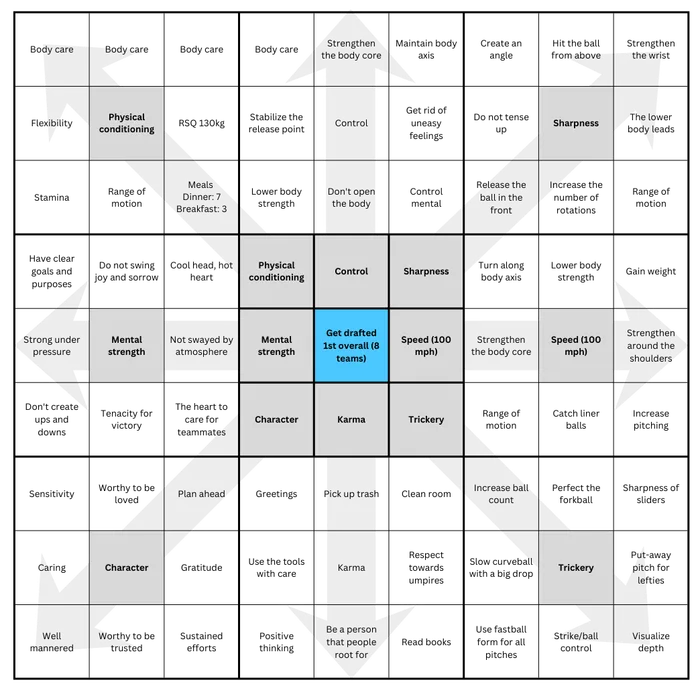
Ohtani’s Filled in Grid in highschool.
Want to stay up to date on Mindset Tips? Join Our Newsletter!